
Guide
Automatic, quartz or solar: which movement suits you?
The movement is the heart of every watch. It determines how accurate the watch is, how much care it needs and how it feels. Here you'll learn how the common types of movement work – and which one suits you.
Updated 7 min readEditorial team wouhr.de
The short version
If you want a watch that simply works, a quartz movement is the pragmatic choice: accurate, affordable, slim. If you find mechanics fascinating and enjoy a ticking heart inside, there's hardly any way round an automatic watch. Solar and radio-controlled watches appeal to anyone who never wants to think about batteries or the clocks changing again. And smartwatches are really small computers on your wrist – with strengths and weaknesses all of their own.
- Quartz: very accurate, affordable, battery change every few years
- Automatic: mechanical, no battery, less accurate, needs servicing
- Hand-wound: mechanical, daily winding, often particularly slim
- Solar: quartz with light charging, very low-maintenance
- Radio-controlled: sets itself via a time signal, including summer/winter time
- Smartwatch: lots of features, but charging every few days
Quartz movements: precise and easy-care
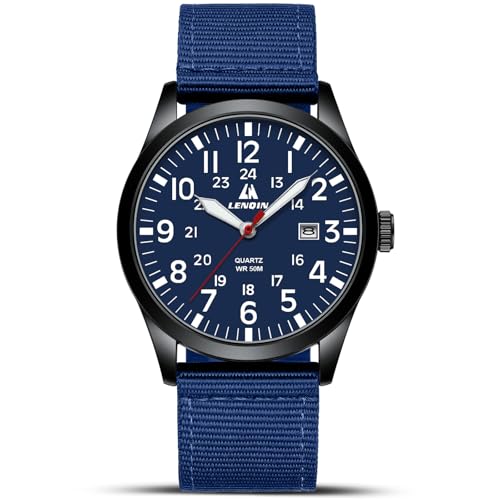
A quartz movement uses a small quartz crystal that a battery causes to oscillate – in wristwatches usually 32,768 times per second. An electronic circuit divides this frequency down and drives a stepper motor that moves the hands on once per second. The result is high accuracy: common movements deviate by only a few seconds a week, usually up to around 20 seconds a month. High-accuracy quartz movements with temperature compensation achieve much less.
Depending on the movement and its functions, the battery lasts two to five years, even longer in some digital watches. When it's changed, make sure the seals are checked, otherwise water resistance suffers. Incidentally, you shouldn't leave a dead battery in the case for long, as it can leak.
A special case is the meca-quartz chronograph (such as the Seiko VK63): quartz handles timekeeping, while a mechanical module with a smoothly sweeping hand handles the stopwatch. There are also "sweep" quartz movements such as the Seiko VH31, whose seconds hand moves in small steps, almost gliding – a look reminiscent of mechanical watches.
Popular quartz watches
Ad All products linked with "View offer" are commission (affiliate) links: if you buy through them, we earn a commission – the price stays the same for you. As an Amazon Associate and eBay Partner Network affiliate we earn from qualifying purchases. Learn more
 Ad−43%
 Ad−50%
 Ad−40%
 Ad−47%
Automatic and hand-wound: mechanics you can feel
Mechanical watches store energy in a tensioned mainspring. Via a gear train, it releases this energy evenly to the escapement and the balance wheel – an oscillating wheel with a hairspring that sets the beat. In common movements the balance beats at 21,600 or 28,800 vibrations per hour; this creates the typical fine ticking and the sweeping seconds hand.
In an automatic watch, a rotor winds the spring as soon as you move your wrist. A hand-wound watch, by contrast, is wound daily via the crown. The power reserve – the running time without rewinding – is usually around 40 hours, while modern movements manage 70 to 80 hours. If not worn, the watch then stops.
The accuracy of mechanical watches depends on the movement, regulation, position and temperature. The widely used Seiko calibre NH35 is specified at −20 to +40 seconds per day, and many examples run better. Miyota movements from Citizen such as the 8215 or 9015 are in a similar league. Swiss movements such as the ETA 2824-2 or Sellita SW200 can be adjusted more finely; officially certified chronometers achieve −4/+6 seconds per day.
Mechanical watches need a service roughly every five to ten years, in which the movement is dismantled, cleaned and re-oiled. In return, with good care they can last for decades. Watch out for magnetic fields: speakers, tablet cases with magnets or wireless chargers can magnetise a mechanical watch so that it suddenly runs noticeably fast or slow. A watchmaker can demagnetise it in a few minutes.
Automatic watches compared
Ad All products linked with "View offer" are commission (affiliate) links: if you buy through them, we earn a commission – the price stays the same for you. As an Amazon Associate and eBay Partner Network affiliate we earn from qualifying purchases. Learn more
 Ad
Ad AdAd
AdAd Ad
AdSolar and radio-controlled watches: never set them again
Solar watches are essentially quartz watches whose energy comes from a solar cell beneath the dial. Light charges a rechargeable battery that powers the watch for months, even in the dark. Well-known systems are Citizen Eco-Drive and Casio Tough Solar; Seiko and many outdoor smartwatches also use solar cells. The rechargeable battery may need replacing after many years, but there's no conventional battery change.
Radio-controlled watches receive a time signal and set themselves – in Germany usually via the long-wave transmitter DCF77 in Mainflingen near Frankfurt am Main. They usually synchronise at night, switch automatically between summer and winter time and are therefore accurate to the second. Multiband models also receive transmitters in the UK, the USA, Japan and China. Combinations of solar and radio control are especially low-maintenance.
Smartwatch: a computer instead of a movement
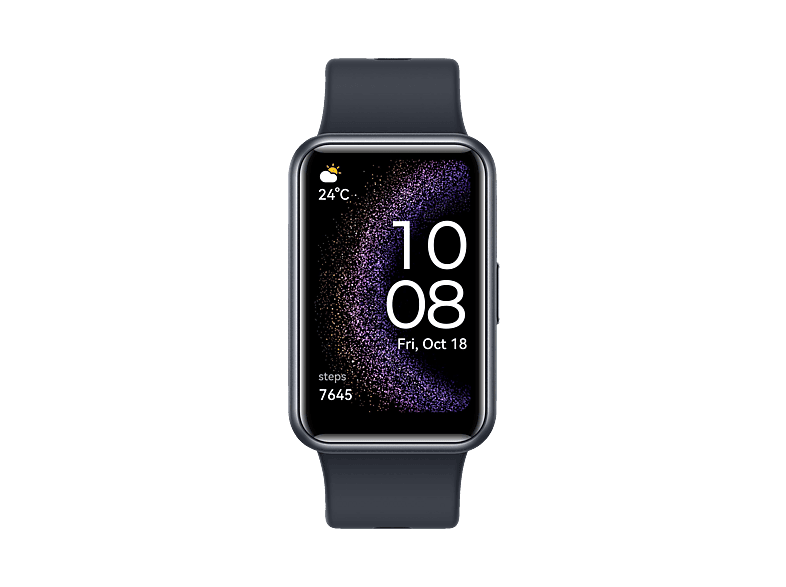
A smartwatch has no movement in the classic sense, but a processor, a display and a battery. It gets the time from the connected smartphone. In return it offers notifications, fitness and health features, often GPS, music control, payments and calling. The price is the need to charge: every one to three days depending on the system, or after one to two weeks for frugal models. On top of that, a smartwatch becomes technically outdated once the manufacturer stops delivering updates – a mechanical watch, by contrast, remains a watch.
Hybrid smartwatches combine both: analogue hands with a step counter, notification alerts and a battery life of several weeks.
Smartwatches with long battery life & brand apps
Ad All products linked with "View offer" are commission (affiliate) links: if you buy through them, we earn a commission – the price stays the same for you. As an Amazon Associate and eBay Partner Network affiliate we earn from qualifying purchases. Learn more
 Ad−10%
Xiaomi Smart Band 10, Smart Watch,Fitness-Tracker, 1,72" AMOLED Display …
 Ad
Ad Ad
Ad Ad
AdHow to find your movement
Think about how you use your watch. If you wear it every day and want no hassle, quartz or solar is ideal. If you often switch between several watches, an automatic will stop now and then – for some, resetting it is part of the ritual, for others it's annoying. If you need health data and notifications, there's no way round a smartwatch. And if you're looking for a watch that will last for decades, that you can repair and pass on, a solid mechanical movement is a lovely choice.
- Greatest accuracy: radio-controlled or high-accuracy quartz watch
- Least effort: solar radio-controlled watch
- Mechanical fascination: automatic or hand-wound
- Most features: smartwatch
Identifying the movement: reading product descriptions
Not every description clearly states the movement. Keywords such as "Quarz", "Quartz" or "Batterie" (battery) point to a quartz movement. "Automatik", "Automatic", "Selbstaufzug" (self-winding) or "mechanisch" (mechanical) indicate a mechanical movement; here it's worth checking whether a specific calibre is named, such as NH35, Miyota 8215, Seagull ST16 or ETA 2824. A precise calibre is a good sign, because you can then look up accuracy, power reserve and spare parts availability.
Be careful with terms such as "Automatik-Look" (automatic look) or "Skelett-Quarz" (skeleton quartz): some cheap watches have an openworked dial but are powered by a battery. Also watch out for phrases like "Japan Movement" – this can mean either a quartz or a mechanical movement of Japanese origin. If in doubt, the seconds hand helps: if it jumps once a second, it's almost always quartz; if it glides in many small steps, it's usually a mechanical movement or a sweep quartz.
- Clearly named calibre: easy to verify
- "Sichtboden" or "Glasboden" (display caseback): usually mechanical
- "Tough Solar", "Eco-Drive": solar quartz
- "Funk", "Radio Controlled", "Multiband": radio-controlled watch
Costs over the watch's lifetime
When comparing, it's worth looking beyond the purchase price. A quartz watch needs a new battery every few years, ideally with a water resistance test. A mechanical watch needs no battery but requires a service at longer intervals, which can cost a noticeable amount depending on the movement and watchmaker – with simple movements such as the NH35, swapping the movement is sometimes more economical. Solar watches are the cheapest to run over many years. Smartwatches have no maintenance costs, but are usually replaced after a few years because the battery or software can no longer keep up.
FAQ
Which is more accurate, quartz or automatic?
Quartz. Common quartz movements deviate by a few seconds a month, simple automatic movements by a few seconds a day.
How long does an automatic watch run without being worn?
As long as the power reserve lasts – usually around 40 hours, up to 80 hours with modern movements.
Does a solar watch need direct sunlight?
No, normal daylight and bright artificial light are enough. If it is left in the dark for a long time, it often switches to a power-saving mode.
Do radio-controlled watches work everywhere in Germany?
The DCF77 signal can be received throughout Germany. In reinforced concrete buildings or next to electronic devices reception may be disrupted; leaving the watch by a window overnight then helps.