
Guide
Buying a smartwatch: 8 things that really matter
Hundreds of sports modes, huge displays, blood pressure measurement – smartwatch spec sheets try to outdo one another. These eight points help you find the watch that really fits your everyday life.
Updated 7 min readEditorial team wouhr.de
1. Compatibility with your smartphone
The first filter is your phone. The Apple Watch only works with the iPhone and is most deeply integrated there: replying to messages, Apple Pay, health data in the Health app. Samsung's current Galaxy Watch models run Wear OS and require an Android smartphone; features such as ECG or blood pressure measurement via the Samsung Health Monitor app also require a Galaxy phone. The Google Pixel Watch and other Wear OS watches also only connect to Android.
Huawei, Amazfit, Xiaomi and Garmin use their own apps on both Android and iOS. On the iPhone, however, some features are restricted – typically replying to messages or installing third-party apps. Check the manufacturer's compatibility list before buying.
2. Assessing battery life realistically
Battery life depends mainly on the operating system. Apple Watch and Wear OS watches usually last one to two days, some models three. Watches with their own lightweight system, such as the Huawei Watch GT series, many Amazfit and Xiaomi models or Garmin sports watches, manage one to two weeks, and some Garmin models with solar glass even more.
Manufacturer figures are usually based on a usage profile with few notifications and no always-on display. GPS recording, music, LTE and a permanently active display shorten battery life considerably. If you wear the watch at night for sleep tracking, you need a charging routine – in the morning while you shower, for example.
3. Display: AMOLED or LCD, round or square
AMOLED displays offer vivid colours, high contrast and a power-saving always-on display, because black pixels use no power. LCDs are cheaper but look paler. Transflective MIP displays, as used in many Garmin watches, are excellently legible in sunlight and very frugal, but less colourful. Round displays look like a classic watch, square ones show more text. A sapphire crystal or a raised bezel protects against scratches.
Also pay attention to brightness, stated in nits: values from about 1,000 nits make the watch easy to read even in bright sunshine. An ambient light sensor adjusts the brightness automatically and saves battery. If you only wear glasses for reading, you'll benefit from large fonts and high-contrast watch faces, which can be set in the app on most watches.
4. GPS and sports features
Many cheap smartwatches advertise more than a hundred sports modes. Often these only record time, heart rate and estimated calories. What matters for runners, cyclists and hikers is built-in GPS, ideally with several satellite systems (GPS, Galileo, GLONASS, BeiDou) or dual-band reception for greater accuracy between tall buildings and in forests. Watches with "connected GPS" use your phone and only work if you have it with you.
Smartwatches from major brands
Ad All products linked with "View offer" are commission (affiliate) links: if you buy through them, we earn a commission – the price stays the same for you. As an Amazon Associate and eBay Partner Network affiliate we earn from qualifying purchases. Learn more
 Ad−10%
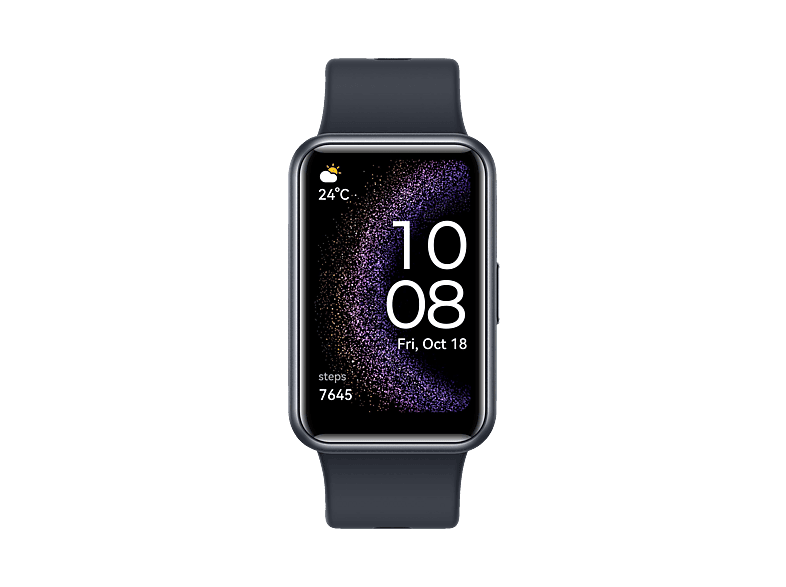
Xiaomi Smart Band 10, Smart Watch,Fitness-Tracker, 1,72" AMOLED Display …
 Ad−11%
 Ad
Ad Ad
Ad5. Putting health features into perspective
Optical heart rate measurement is standard and usually serviceable in everyday life. SpO2 (blood oxygen), stress scores, sleep phases and skin temperature are estimates that can be useful as trends. Some branded watches offer an ECG function that is approved as a medical device in the EU and can indicate signs of atrial fibrillation.
Be careful with blood pressure: many cheap watches display blood pressure readings without having a cuff or medical approval. These readings are not reliable. If you need to monitor your blood pressure, use a validated upper-arm monitor and talk to your doctor. No smartwatch replaces a medical diagnosis.
6. Calling, payments and music
With a speaker and microphone, you can take calls via Bluetooth directly on the watch, as long as your phone is nearby. LTE models with an eSIM make calls without a phone too, but need an add-on plan. Contactless payment requires NFC – and that your bank supports the relevant service (Apple Pay, Google Wallet, Samsung Wallet, Garmin Pay, Huawei solutions). For music without your phone you need internal storage or streaming support, plus Bluetooth headphones.
Smartwatches with calling
Ad All products linked with "View offer" are commission (affiliate) links: if you buy through them, we earn a commission – the price stays the same for you. As an Amazon Associate and eBay Partner Network affiliate we earn from qualifying purchases. Learn more
 Ad−75%
 Ad−79%
 Ad−73%
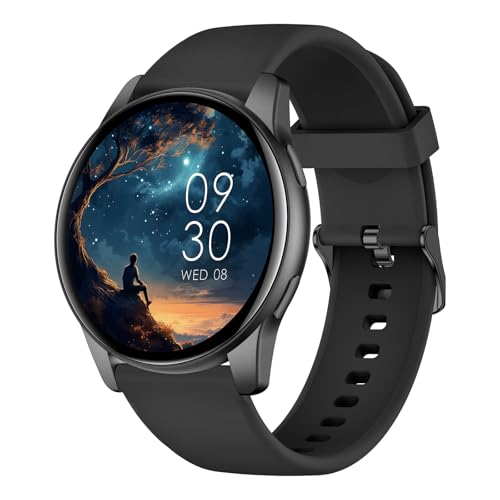
AcclaFit Smartwatch Damen Herren, 1.38 Zoll HD-Display Smart Watch mit …
 Ad−77%
7. Water resistance and ruggedness
Look for the right rating: IP67 or IP68 protects against dust, rain and brief immersion, but not against water pressure while swimming. For the pool and lakes, the watch should have at least 5 ATM, offer a swim mode and be approved for swimming according to the manufacturer's specifications. Outdoor models with reinforced cases withstand knocks better. Avoid hot water, soap and saunas with any smartwatch.
8. Privacy, updates and lifespan
A smartwatch collects sensitive data: location, heart rate, sleep. Major manufacturers publish privacy policies and offer export functions. With very cheap unbranded watches, the app often runs via unknown providers, and it's unclear where data is stored. If this matters to you, it's worth checking the app reviews and the privacy information in the app store.
Lifespan plays a role too. Batteries noticeably lose capacity after a few hundred charging cycles, and software updates end at some point. Branded manufacturers usually deliver several years of updates. For older models on clearance: a cheap way in, but possibly shorter support. When buying from a retailer in the EU, you have a two-year statutory warranty – regardless of any additional manufacturer's guarantee.
- Does the watch work with your phone's operating system?
- Is the battery life enough for your daily routine?
- Do you need built-in GPS, or is phone GPS enough?
- At least 5 ATM and the manufacturer's swim approval if you want to swim
- A reputable app with a transparent privacy policy
Cheap unbranded smartwatch or branded model?
A large share of the smartwatches on sale come from little-known manufacturers and cost only a fraction of an Apple Watch or Galaxy Watch. On paper these watches often offer an astonishing amount: large displays, calling, blood pressure and blood oxygen measurement, numerous sports modes. For notifications, steps, alarms and occasional calls they are often perfectly adequate in everyday life.
The differences show in the details: the sensors are less accurate, real GPS is usually missing, the apps are simpler and updates rare. In addition, models change quickly, so spare cables or straps are hard to get later. Branded models cost more but offer more reliable readings, long-term updates, better apps and often extra features such as payments or ECG. So consider how important these points are to you – and rather compare a well-equipped previous-generation branded model with a new unbranded watch.
Before you buy: a quick size checklist
Measure your wrist circumference with a tape measure or a strip of paper. Up to about 16 centimetres, smaller cases (around 40 mm or 1.3 inches) usually look better; above that, 44 to 46 millimetres also fits. Also check weight and case height in the technical specifications: a watch over 50 grams is noticeable when sleeping and typing on a laptop. If you're unsure, order from a retailer with hassle-free returns – when buying online in the EU you usually have a 14-day right of withdrawal anyway.
The right strap
The strap determines wearing comfort more than many people think. Silicone and fluoroelastomer are waterproof and ideal for sport, but can make sensitive skin sweat. Nylon hook-and-loop straps are airy and infinitely adjustable; leather and metal look more elegant but are less suited to training. Before you buy, check whether the watch uses standard 20 or 22 mm spring bars or its own quick-release system – this determines how wide the choice of replacement straps will be later.
FAQ
Which smartwatch works with the iPhone?
The Apple Watch is the best integrated. Garmin, Huawei, Amazfit and Xiaomi also work, sometimes with restricted features. Current Samsung Galaxy Watches and other Wear OS watches require Android.
How accurate is smartwatch blood pressure measurement?
Not reliable on most cheap models, as there is no medical validation. For monitoring blood pressure, use a certified upper-arm monitor.
Do I need a smartwatch with LTE?
Only if you want to be reachable without your phone, for example when running. For most people Bluetooth calling, which needs no add-on plan, is enough.
How long does a smartwatch last?
Technically often many years, but battery capacity and software updates limit its useful life. Branded manufacturers usually support their models with updates for several years.